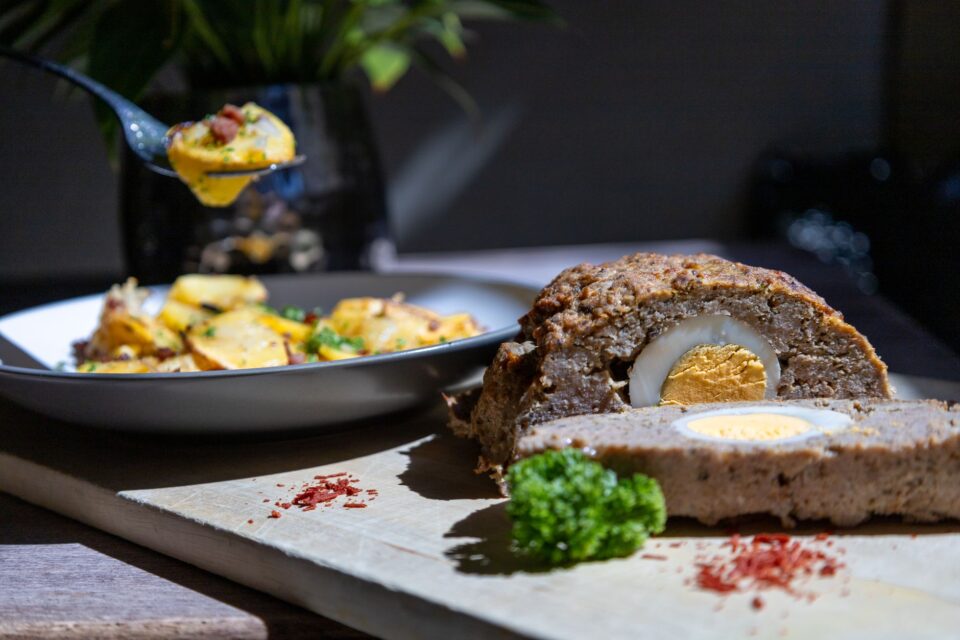
For a classic 1 lb ground beef meatloaf recipe, bake at 350°F for 50–60 minutes until the center reaches 160°F. Mix 1 lb 80–85% lean beef with 1 egg, 1/3–1/2 cup breadcrumbs, 1/4–1/3 cup milk, 1/2 cup finely diced onion, 1 tbsp Worcestershire, 1 tsp garlic powder, 1 tsp Italian seasoning, 1/2 tsp salt, and 1/4 tsp pepper; top with a ketchup–brown sugar glaze.
This loaf serves 2–4 and should rest 10 minutes before slicing. Use a loaf pan for a softer exterior or shape a freeform loaf on a sheet pan for more crust; apply half the glaze upfront and the rest late in the bake. If you prefer, swap panko for breadcrumbs or use oats; gentle mixing keeps the texture tender and juicy.
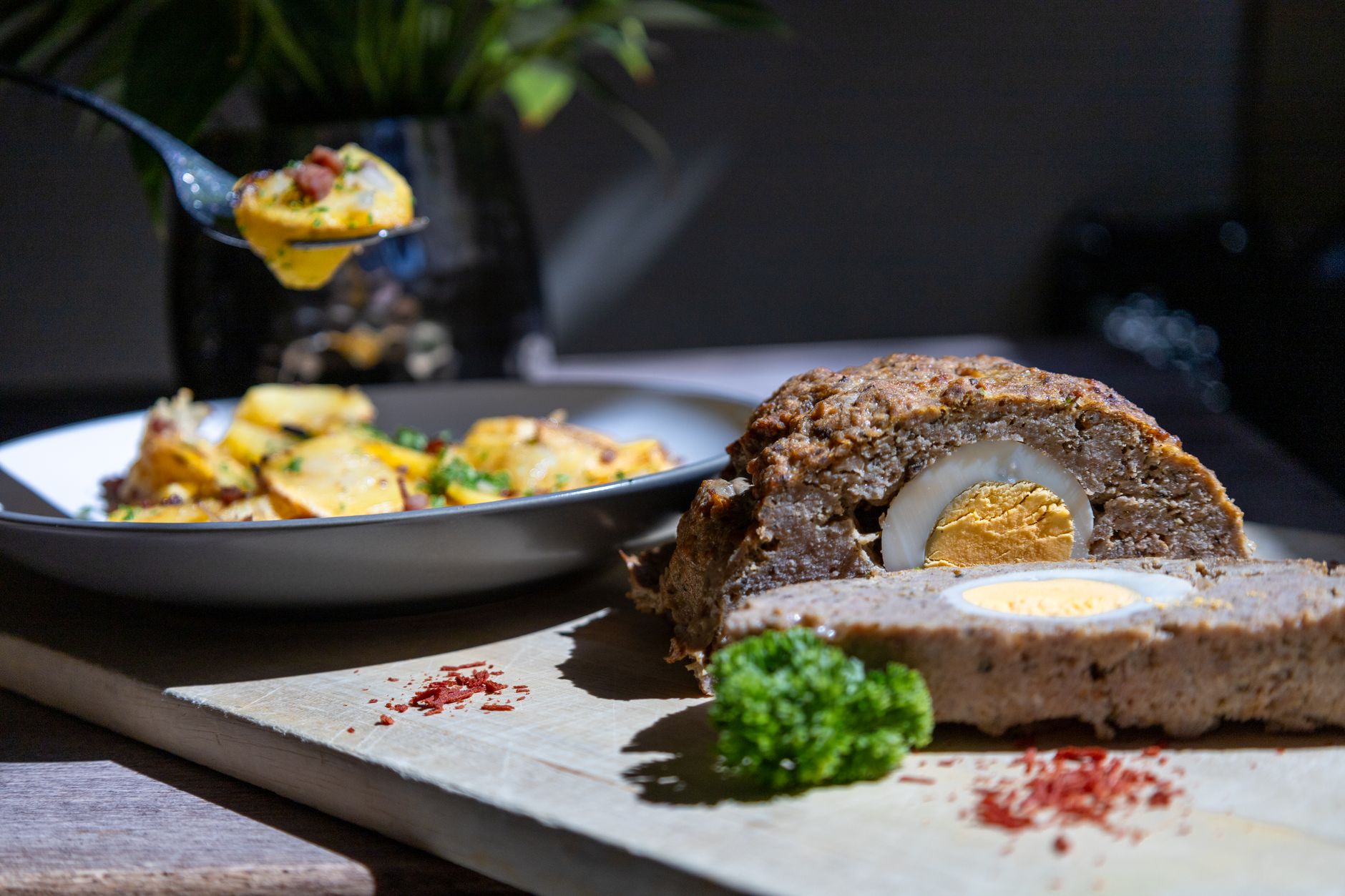
1 lb Ground Beef Meatloaf Recipe (Quick Answer)
Here is the reliable, no-fuss formula tailored for exactly 1 pound of ground beef, with the timing and glaze that make a classic, juicy loaf.
- Oven: 350°F, rack in the center.
- Base mix: 1 lb ground beef (80–85% lean), 1 large egg, 1/3–1/2 cup breadcrumbs or panko, 1/4–1/3 cup milk, 1/2 cup very finely diced onion, 1 tbsp Worcestershire sauce, 1 tsp garlic powder, 1 tsp Italian seasoning, 1/2 tsp fine salt (start here; increase to 3/4 tsp if using coarse salt), 1/4 tsp black pepper.
- Glaze: 1/3 cup ketchup, 1 tbsp brown sugar, 1 tsp apple cider vinegar (optional but bright).
- Shape: 8×4-inch loaf pan or freeform loaf about 8×4 inches.
- Bake: 50–60 minutes (pan), 45–55 minutes (freeform) to 160°F internal.
- Glaze timing: Brush half the glaze before baking; brush the rest in the last 10–15 minutes.
- Rest: 10 minutes before slicing (keeps the juices in).
- Yield: 2–4 servings.
Fast choices: For softer sides and less crust, bake in a loaf pan. For more browned edges and easier grease management, shape a freeform loaf on a parchment-lined sheet. Mini loaves cook faster (see the method comparison table below). As a rule of thumb per pound, use 1 egg and 1/2–3/4 tsp fine salt.
Step-by-Step: Mix, Shape, and Bake
- Prep the pan and oven. Heat oven to 350°F. Line a loaf pan with a parchment sling or line a sheet pan with parchment. Lightly oil.
- Soak the crumbs. In a large bowl, combine the breadcrumbs and milk. Let stand 3–5 minutes to hydrate. This step keeps the loaf moist and prevents dense texture.
- Add aromatics and seasonings. Mix in the finely diced onion, Worcestershire, garlic powder, Italian seasoning, salt, and pepper. Stir until evenly distributed.
- Add the egg and beef. Crack in the egg and add the ground beef. Use your hands or a fork to gently fold until the mixture just comes together. Stop as soon as it looks cohesive. Overmixing compacts the meat and makes it tough.
- Shape. For a loaf pan: press gently into an 8×4-inch pan, rounding the top slightly. For freeform: shape into a tight 8×4-inch loaf with flat sides and a rounded top; place on the prepared sheet. Aim for even thickness to promote even cooking.
- Glaze, bake, re-glaze. Stir the ketchup, brown sugar, and vinegar. Brush half the glaze over the loaf. Bake: 50–60 minutes in a loaf pan or 45–55 minutes freeform, until a thermometer in the center reads 160°F. Spread the remaining glaze on in the last 10–15 minutes.
- Rest and slice. Let the loaf rest 10 minutes to let juices redistribute. Slice with a sharp knife into 3/4-inch slices.
Tip: If the onion is chunky, sauté it briefly in a teaspoon of oil until translucent, then cool before mixing. This removes sharpness and helps the loaf hold together.
Binder and Beef Fat Guide: Keep It Juicy, Not Dense
Great meatloaf balances moisture and structure. Here is how to get that balance right for a 1 lb loaf:
- Beef choice. 80/20 to 85/15 (lean/fat) beef delivers the classic juicy texture. If your beef is leaner (90/10 or 93/7), increase milk by 1–2 tbsp and add an extra tablespoon of breadcrumbs, or fold in a teaspoon of olive oil to compensate.
- Binder options with ratios. Breadcrumbs or panko give a light, even crumb. Rolled oats work similarly and add a bit more body. For 1 lb beef, use one of the following: 1/2 cup breadcrumbs or panko, 1/2 cup rolled oats (pulse briefly), 1/3 cup crushed buttery crackers, or 1/3 cup gluten-free breadcrumbs. Always pair with 1/4–1/3 cup milk (or unsweetened dairy alternative).
- Egg per pound. One large egg per 1 lb helps bind and adds richness. For 2 lb meatloaf, many cooks use 2 eggs, though 1 egg can still work if you maintain the breadcrumb and milk ratio and avoid overmixing.
- Gentle handling. Treat it like a delicate burger mixture. Work lightly and stop mixing when ingredients are evenly distributed. Pressing too hard compacts the loaf and dries it out.
- Seasoning ratio. Per pound, start with 1/2–3/4 tsp fine salt (3–5 g), 1/4 tsp ground black pepper, 1 tsp garlic powder, and 1 tsp dried Italian seasoning. Taste a small test patty in a skillet if you want to fine-tune salt or spices before baking.
Baking Methods Compared: Loaf Pan vs Freeform vs Mini vs Air Fryer
Different shapes and tools change cook time, crust, and how much fat collects around the loaf. Choose what fits your schedule and texture preferences.
| Method | Shape/size | Temp | Cook time to 160°F | Crust/edges | Grease management | Pros | Best for |
|---|---|---|---|---|---|---|---|
| Loaf pan | 8×4-inch loaf | 350°F | 50–60 min | Softer sides, glossy glaze | Fat collects; pour off or use parchment sling | Traditional look, easy to slice | Set-and-forget dinners |
| Freeform (sheet) | 8×4-inch hand-shaped | 350°F | 45–55 min | More crust on all sides | Fat renders away on parchment; easy to spoon off | Crispier exterior, faster cook | Crust lovers, quicker results |
| Mini loaves | 4–6 mini loaves | 350°F | 22–30 min | Lots of edges | Minimal pooling | Fast, portion-friendly | Weeknights, lunch prep |
| Air fryer | Single 1 lb loaf or 2 minis | 325–350°F | 30–40 min (loaf), 18–25 min (minis) | Even browning, good glaze set | Drip tray catches fat | Fast without heating the kitchen | Small kitchens, hot days |
Air fryer timing varies by model. Start checking at the early end of the range and go by a thermometer. If the top browns too quickly, tent loosely with foil.
Scale It: Eggs, Salt, and Seasoning Per Pound
Use this per-pound mini-chart to scale up or down while keeping texture and seasoning balanced.
| Ground beef amount (lb) | Eggs (count) | Salt (tsp & grams) | Breadcrumbs/Panko (cup) | Milk (cup) | Onion (cup) | Worcestershire (tbsp) | Bake time at 350°F (minutes) |
|---|---|---|---|---|---|---|---|
| 0.5 | 1 (small) | 1/4–3/8 tsp (1.5–2.5 g) | 1/4–1/3 | 3–4 tbsp | 1/4 | 1/2 | 35–45 |
| 1.0 | 1 | 1/2–3/4 tsp (3–5 g) | 1/3–1/2 | 1/4–1/3 | 1/2 | 1 | 50–60 |
| 1.5 | 1–2 | 3/4–1 tsp (5–6 g) | 3/4 | 1/2 | 3/4 | 1.5 | 60–75 |
| 2.0 | 2 | 1–1.5 tsp (6–9 g) | 1 | 2/3–3/4 | 1 | 2 | 70–90 |
Glaze scaling: for each pound, use about 1/3 cup ketchup + 1 tbsp brown sugar. For 2 lb, double it. If you prefer a thinner glaze, add 1–2 tsp vinegar or water.
Common question: How many eggs for 2 pounds of ground beef? Many home cooks use 2 eggs for a 2 lb loaf. One egg can work if you keep the crumb and milk ratio steady and mix gently.
Troubleshooting and Common Mistakes
- Cracked top. Often from overmixing or a very stiff mix. Hydrate crumbs fully, use the full 1/4–1/3 cup milk, and handle gently. A small ridge isn’t a problem; it gives the glaze somewhere to cling.
- Greasy loaf. Use 80–85% lean beef and manage fat: freeform on parchment lets fat render away, or lift the loaf from a pan with a parchment sling and spoon off pooled fat in the last 15 minutes. Don’t pack the loaf too tight; tight packing squeezes fat out.
- Mushy or loose texture. Too much milk or too little binder can cause this. For 1 lb, keep milk at 1/4–1/3 cup and crumbs at 1/3–1/2 cup. Chill the shaped loaf 10–15 minutes before baking if it feels soft.
- Dry texture. Lean beef, overbaking, or too few crumbs can dry meatloaf. Choose 80/20 or 85/15 beef, pull at 160°F, and keep milk + crumbs in range. Add 1 tsp olive oil or an extra tablespoon of milk if using very lean beef.
- Undercooked center. A dense loaf or high pan can slow heat. Shape evenly, avoid a domed center, and check temperature in multiple spots. If the top browns too fast, tent loosely with foil and keep baking to 160°F.
- Glaze sliding off. Pat the loaf dry on top before glazing, brush a thin first layer, and apply the second layer late in baking. For extra stick, stir in 1 tsp Dijon.
Make-Ahead, Freeze, and Reheat
Make ahead: Assemble the loaf up to 24 hours ahead. Cover and refrigerate. Brush the first half of the glaze right before it goes into the oven to keep color bright. Add a few minutes to the bake if starting cold.
Freeze, raw: Shape the loaf on a parchment-lined tray. Freeze until firm, then wrap tightly in plastic, then foil. Label with date. Freeze up to 2 months for best quality. Thaw overnight in the refrigerator, glaze, and bake as directed (allow extra time if still slightly icy).
Freeze, cooked: Cool the baked loaf fully. Slice and place parchment between slices, then wrap and bag. Reheat slices covered at 300°F for 12–18 minutes or in a covered skillet over medium-low heat with a splash of water until warmed through.
Reheat a whole loaf: 300°F for 20–30 minutes, covered, until hot. Add a fresh swipe of glaze near the end to revive shine. Always heat leftovers to steaming hot.
Time & cost snapshot: Hands-on time is about 15–20 minutes; total time 65–75 minutes (pan method). Ingredient costs vary by region; a 1 lb loaf often lands in a budget-friendly range compared to takeout. For planning fast weeknights, see Easy Weeknight Dinners: A Practical System for Busy Evenings for a simple rotation that pairs well with this recipe.
Meal prep note: Pack slices with roasted vegetables or salad. For safe, tidy storage and reheating, check the guide to containers here: Meal Prep Containers: A Practical Cook’s Guide to Materials, Sizes, and Safety.
Easy Variations and What to Serve
- Glaze swaps. BBQ glaze (1/3 cup BBQ sauce + 1 tsp brown sugar), mustard-honey glaze (3 tbsp ketchup + 1 tbsp Dijon + 1 tbsp honey), or a tangy tomato glaze (ketchup + a dash of hot sauce + vinegar).
- Flavor profiles. Italian: add 2 tbsp grated Parm and 2 tbsp chopped parsley, swap Italian seasoning for extra oregano. Smoky: add 1/2 tsp smoked paprika and a pinch of chili powder. Classic diner style: add 2 tbsp finely diced green bell pepper.
- Gluten-free and low-carb. Use gluten-free breadcrumbs or finely ground rolled oats; for low-carb, use 1/4 cup almond flour plus 2 tbsp grated Parmesan with 1/4 cup milk.
- Air fryer mini loaves. Divide into 4 minis and air fry at 325–350°F for 18–25 minutes. Glaze halfway and again near the end.
- Serving ideas. Serve with mashed potatoes and green beans, or roasted carrots and a simple salad. Leftovers make a great sandwich with toasted bread, a thin layer of glaze, and crisp lettuce. For fast lunchbox sides, try ideas from Quick and Healthy Workday Snacks for Your Busy Day.
FAQ: Common Questions People Ask
- How many eggs do I add to 2 pounds of ground beef for meatloaf? Typically 2 eggs, though 1 can work if you maintain the breadcrumb and milk ratio and mix gently.
- How much salt should I add to 1 lb of ground beef for meatloaf? Start with 1/2–3/4 tsp fine salt (3–5 g) per pound. Adjust to taste and consider whether your breadcrumbs are seasoned.
- Is it better to bake meatloaf at 350 or 375? 350°F is the classic standard for even cooking and a tender center. 375°F speeds things up slightly but risks a drier exterior; if you use 375°F, watch the top and tent if browning quickly.
- What is the classic meatloaf recipe? The version here is the classic baseline: 80–85% lean beef, egg, breadcrumbs soaked with milk, onion, Worcestershire, simple spices, and a ketchup-brown sugar glaze, baked at 350°F to 160°F internal.
- Can I make meatloaf without breadcrumbs? Yes. Try rolled oats, crushed pork rinds (low-carb), almond flour plus a little Parmesan, or gluten-free breadcrumbs. Keep the milk so the mixture stays moist.
- How long to cook a 1 lb meatloaf in an air fryer? About 30–40 minutes for a single 1 lb loaf at 325–350°F; minis finish in 18–25 minutes. Always confirm 160°F internal temperature.
Once you’ve made this a few times, you’ll have a house meatloaf you can scale anywhere from a half pound to two pounds with confidence, and you’ll know exactly when to choose pan, freeform, mini, or air fryer based on time and the level of crust you want.